press kit
follow
A folkloric horror compass for iOS, Android, and the web. Walk anywhere old after dark — the device finds 60 entities from Irish, Scottish, and Welsh folklore.
quick facts
- Developer: Creaden Farm (single developer, Waterford, Ireland)
- Platforms: iOS, Android, web (PWA at dreadworks.io)
- Price: Free — 15 of the 60 entities and one personalised reveal. A one-time optional €4.99 “Veil” tier opens the remaining 45 and unlimited personalised reveals (18+ only)
- Age rating: 16+ in-app gate (18+ for the optional AI portrait), frequent intense horror themes (nearest store tiers: PEGI 16, App Store 17+)
- Genre: Folkloric horror, location-based, single-player
- Engine: Next.js 14 PWA wrapped with Capacitor 6 for native shells
- Languages: English (UK) at launch; Irish (ga-IE) and French localisations targeted for the post-launch roadmap
the catalogue (verifiable)
- 60 entities, each documented to a specific written source (Hyde, Gregory, OS Letters of 1839, Folklore Commission, Campbell, Croker)
- 4 tiers of lore per entity, opening as you meet it more often
- 608 audio clips of bespoke sound design across the entity bank, built one at a time rather than stock-licensed
- 59 photoreal entity renders for the live-encounter camera overlay (60th in commission for Donn Fírinne, the v585 mythic-tier addition)
- 9 ritual types wired to specific phone sensors — silence (microphone amplitude), stillness (accelerometer), walking circle (compass heading), face-down phone (gyroscope), cover the lens (camera brightness), breathe (microphone rhythm), trace ward (motion path), iron (haptic hold), echo (microphone speech detection)
- 7-act story arc across hundreds of hours, finale gated on prestige descent + samhain thin night
the angle
Where a location game usually invents a mythology and drapes it over real streets, Follow starts from folklore that already named those places and lets the ground decide what surfaces. A Bean Sí turns up more readily near a graveyard because that is where the 1839 Ordnance Survey Letters put her — the spawn rules are following the record, not decorating it.
The narrator is where it stops behaving like a game. Áine speaks in an Irish whisper, always directly to the player, never in full sentences, and she keeps what she learns between sessions. By act 5 she is referring to details of the player's real walking history she has no business knowing, and act 7 explains why.
The lore is written as archive rather than as flavour text: parish registers, coast guard logs, the essays schoolchildren wrote for the Folklore Commission in 1937. It is released in stages as a player keeps meeting the same entity, so the reading accumulates on its own without anyone being asked to sit and study it.
pull quotes (cleared for citation)
“It doesn't invent a monster and then find a nice spot for it. The graveyard was already hers.”
“She has been listening since the start. You didn't know that.”
“The compass points at things most people don't see. Walk toward them. Identify, banish, or run.”
“You needed to learn to listen, and there was no faster lesson than the bean sí keening a name almost yours.”
screenshots + assets
Press-resolution assets are available on request. Six HERO screenshots are pre-composed (the compass, a field-log entry, the bestiary, the pass-the-haunting share, the story arc, the first-banish keepsake). Each is captioned with one five-word headline.
For a 30-second trailer, see /marketing/trailer-script.txt (text + storyboard).
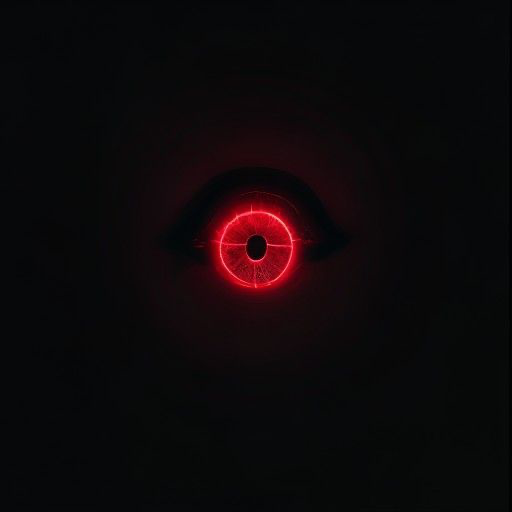
App icon, logo, and brand guidelines: /icon-512.png — the master sigil. The app uses one accent color (#cc8833, ember amber) on a near-black background (#060606). Display font is Cinzel; body font is system monospace stack.
fact-check answers
Q: Does it claim to detect real ghosts?
No. Follow is fiction. The 16+ gate at first launch and every piece of marketing copy consistently treat the entities as folkloric fictions being explored.
Q: Where does player data live?
GPS coordinates are stored in the player's journal entries on a Turso (libSQL) database, bound to a client-generated UUID. Camera frames and microphone audio never leave the device — they are processed in-browser for sensor rituals only. No third-party tracking SDKs.
Q: How many people built this?
One. A pumpkin farmer in Ireland and a lifelong fan of horror and folklore. The folklore curation, audio direction, narrator voice, app architecture, and every line of in-app prose are single-author. Image generation is AI-assisted in two places. The entity silhouettes are pre-made assets, generated with Flux via Pollinations.ai from prompts written for each entity's folkloric source. Separately, an optional personalised reveal transforms a player's own selfie using OpenAI's gpt-image-1 — that photo is uploaded, is treated as biometric data, and the whole feature can be declined without affecting play; the privacy policy sets out retention and deletion in full. The folklore itself — every entity, every rite, every line of narration — is written, not generated.
Q: Is there a Veil paywall?
Every ritual, every rite and the whole 7-act story arc are free, and so are 15 of the 60 entities, including the opening encounter where something wears your own face. The optional one-time €4.99 Veil tier opens the other 45 creatures, unlimited personalised AI face-reveals (18+ only, and free players get one), and a supporter line on the profile. Nothing else is behind it — no ritual, no story beat, no ending.
Q: When does the seasonal content fire?
Three thin nights a year — Samhain (31 October–2 November), Bealtaine (30 April–1 May), and Lughnasadh (31 July–1 August). On these dates, seasonal entities get a 6× spawn weight boost and the act-7 finale becomes reachable for prestige-2+ players.
angles worth covering
- Folklore-grounded design — the catalogue as a pop-vector for the actual celtic horror tradition, not a generic monster-spawn engine.
- Narrator-driven horror — Áine as the mechanism, second-person AI-voiced presence accumulating knowledge of the player across sessions.
- Sensor rituals as physical input — phone hardware repurposed as ritual instruments instead of tap-to-banish gestures.
- Single-developer studio — what one person can ship in 2026 with a strong content discipline and a folklorically anchored design vocabulary.
- The samhain finale — gameplay content that only opens on the calendrical thin night the folklore says it should. A real-world clock as a game gate.
contact
Creaden Farm
Waterford, Ireland
hello@dreadworks.io
@creaden_farm
Press inquiries replied to within 24 hours. Review builds available on request via TestFlight (iOS) or Play Console internal testing track (Android).